
RUPTURE DE LA COIFFE DES ROTATEURS / ROTATORS CUFF RUPTUR
Rotator Cuff Tear
General Presentation
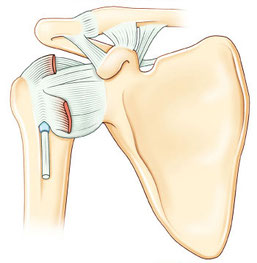
A rotator cuff tear is a partial or complete injury of the stabilizing tendons of the shoulder. The muscles primarily involved are the supraspinatus, infraspinatus, subscapularis, and teres minor. This condition may occur following trauma, a fall, repetitive movements, or progressive degeneration related to aging and mechanical stress.
The most common symptoms include:
- pain during arm elevation,
- muscular weakness,
- loss of mobility,
- night pain,
- cervical and scapular compensation,
- difficulty lifting or carrying objects.
In a Pilates approach, the goal is never purely muscular. The work also focuses on:
- scapular stabilization,
- movement biomechanics,
- breathing,
- neuromuscular coordination,
- reduction of compensations,
- progressive restoration of function.
Global Pilates Programming
Phase 1 — Protection & Reconnection
Goals
- Reduce pain
- Restore lateral thoracic breathing
- Reactivate deep stabilizers
- Avoid cervical compensation
- Reconnect the scapula to the trunk
Recommended Equipment
- Light Reformer
- Cadillac
- Spine Corrector
- Foam roller
- Small stability balls
- Light resistance bands
Important Principles
- Work below the pain threshold
- Avoid heavy loading
- Respect tendon fatigue
- Controlled mobility
- Slow and precise movement
Pilates Protocols — Phase 1
Reformer
Footwork
Goal:
Create proximal stability without excessive shoulder loading.
Instructions:
- Relaxed arms
- Neutral shoulders
- Stable rib cage
- Smooth breathing
Supine Arms with Straps (light resistance)
Goal:
Gradually reintroduce glenohumeral movement.
Work:
- Very light arm resistance
- Small ranges of motion
- Continuous scapular control
Avoid:
- Cervical compensation
- Anterior shoulder translation
- Front shoulder pain
Scapular Isolation
Goal:
Re-educate scapular movement patterns.
Work:
- Protraction
- Retraction
- Depression
- Controlled rotation
Cadillac
Breathing with Push Through Bar
Goal:
Thoracic and scapular reorganization.
Work:
- Lateral breathing
- Gentle thoracic spine mobility
- Cervical decompression
Assisted Arm Openings
Goal:
Controlled mobility without overload.
Work:
- Progressive openings
- Humeral control
- Scapular stabilization
Spine Corrector
Thoracic Extension Support
Goal:
Improve thoracic extension in order to decrease shoulder stress.
Work:
- Gentle extension
- Breathing
- Rib cage opening
Phase 2 — Stabilization & Progressive Strengthening
Goals
- Restore dynamic stability
- Strengthen the rotator cuff without irritation
- Reintroduce functional muscular chains
- Improve postural endurance
Pilates Protocols — Phase 2
Reformer
Serving Tray
Goal:
Improve humeral head centering.
Hug a Tree
Goal:
Enhance scapulothoracic control.
Rowing Front
Goal:
Coordinate trunk, scapula, and arm movement.
Elephant (modified)
Goal:
Integrate muscular chains without excessive loading.
Cadillac
Push Through Bar Standing
Goal:
Global functional integration.
Arm Springs Series
Goal:
Light muscular endurance and fine motor control.
Chair
Standing Pumping (light)
Goal:
Global postural integration.
Attention:
- Monitor upper trapezius tension
- Maintain scapular alignment
Phase 3 — Functional Return
Goals
- Restore daily functional movements
- Improve complex coordination
- Reintroduce overhead movements
- Develop overall endurance
Advanced Exercises (depending on progression)
Reformer
- Preparatory Long Stretch
- Modified Side Splits
- Scooter with scapular stability
- Swimming Prep
Cadillac
- Roll Down with arm stability
- Controlled unilateral work
- Cross-body coordination
Chair
- Press Down Front
- Adapted wall push-ups
- Functional asymmetrical work
Important Precautions
Avoid
- Acute pain
- Early heavy loading
- Excessive fatigue
- Cervical compensation
- Shoulder elevation
- Fast and unstable movement
Breathing Work
Breathing plays a fundamental role in recovery:
- reducing accessory tension,
- improving thoracic mobility,
- decreasing cervical compensation,
- enhancing motor control.
Lateral thoracic breathing often helps reduce overactivity in the upper trapezius and accessory breathing muscles.

Rupture de la coiffe des rotateurs
Présentation générale
La rupture de la coiffe des rotateurs correspond à une lésion partielle ou complète des tendons stabilisateurs de l’épaule. Les muscles principalement concernés sont le supra-épineux, l’infra-épineux, le subscapulaire et le petit rond. Cette pathologie peut apparaître après un traumatisme, une chute, des mouvements répétitifs ou une dégénérescence progressive liée à l’âge et aux contraintes mécaniques.
Les symptômes les plus fréquents sont :
- douleur lors de l’élévation du bras,
- faiblesse musculaire,
- perte de mobilité,
- douleurs nocturnes,
- compensation cervicale et scapulaire,
- difficulté à porter ou soulever des charges.
Dans une approche Pilates, l’objectif n’est jamais uniquement musculaire. Le travail vise également :
- la stabilisation scapulaire,
- la qualité biomécanique du mouvement,
- la respiration,
- la coordination neuromusculaire,
- la diminution des compensations,
- la restauration progressive de la fonction.
Programmation globale Pilates
Phase 1 — Protection & Reconnection
Objectifs
- Diminuer la douleur
- Restaurer la respiration thoracique latérale
- Réactiver les stabilisateurs profonds
- Éviter les compensations cervicales
- Reconnecter la scapula au tronc
Équipement recommandé
- Reformer léger
- Cadillac
- Spine Corrector
- Foam roller
- Petits ballons
- Élastiques légers
Principes importants
- Travail sous le seuil douloureux
- Absence de charge lourde
- Respect de la fatigue tendineuse
- Mobilité contrôlée
- Travail lent et précis
Protocoles Pilates — Phase 1
Reformer
Footwork
Objectif :
Créer une stabilité proximale sans sollicitation excessive de l’épaule.
Consignes :
- Bras relâchés
- Épaules neutres
- Cage thoracique stable
- Respiration fluide
Supine Arms with Straps (léger)
Objectif :
Réintroduire progressivement le mouvement gléno-huméral.
Travail :
- Bras très légers
- Petites amplitudes
- Contrôle scapulaire permanent
Éviter :
- Compensation cervicale
- Antériorisation de l’épaule
- Douleur antérieure
Scapular Isolation
Objectif :
Rééduquer les mouvements de la scapula.
Travail :
- Protraction
- Rétraction
- Dépression
- Rotation contrôlée
Cadillac
Breathing with Push Through Bar
Objectif :
Réorganisation thoracique et scapulaire.
Travail :
- Respiration latérale
- Mobilité douce du rachis thoracique
- Décompression cervicale
Assisted Arm Openings
Objectif :
Mobilité contrôlée sans surcharge.
Travail :
- Ouvertures progressives
- Contrôle de l’humérus
- Stabilisation scapulaire
Spine Corrector
Thoracic Extension Support
Objectif :
Améliorer l’extension thoracique afin de diminuer les contraintes sur l’épaule.
Travail :
- Extension douce
- Respiration
- Ouverture de cage thoracique
Phase 2 — Stabilisation & Renforcement progressif
Phase 2 — Stabilization & Progressive Strengthening
Objectifs
- Restaurer la stabilité dynamique
- Renforcer la coiffe sans irritation
- Réintroduire les chaînes fonctionnelles
- Améliorer l’endurance posturale
Protocoles Pilates — Phase 2
Reformer
Serving Tray
Objectif :
Travail du centrage huméral.
Hug a Tree
Objectif :
Contrôle scapulo-thoracique.
Rowing Front
Objectif :
Coordination tronc-scapula-bras.
Elephant (modifié)
Objectif :
Intégration des chaînes musculaires sans surcharge excessive.
Cadillac
Push Through Bar Standing
Objectif :
Travail fonctionnel global.
Arm Springs Series
Objectif :
Endurance musculaire légère et contrôle fin.
Chair
Standing Pumping (léger)
Objectif :
Intégration posturale globale.
Attention :
- Surveillance du trapèze supérieur
- Contrôle de l’alignement scapulaire
Phase 3 — Retour fonctionnel
Phase 3 — Functional Return
Objectifs
- Restaurer les gestes du quotidien
- Améliorer la coordination complexe
- Réintroduire les mouvements au-dessus de la tête
- Développer l’endurance globale
Exercices avancés (selon évolution)
Reformer
- Long Stretch préparatoire
- Side Splits modifiés
- Scooter avec stabilité scapulaire
- Swimming prep
Cadillac
- Roll Down avec stabilité des bras
- Travail unilatéral contrôlé
- Coordination croisée
Chair
- Press Down Front
- Pompes murales adaptées
- Travail fonctionnel asymétrique
Précautions importantes
Éviter
- Douleur aiguë
- Charges lourdes précoces
- Fatigue excessive
- Compensation cervicale
- Haussement d’épaule
- Travail rapide et instable
Travail respiratoire
La respiration joue un rôle fondamental dans la récupération :
- diminution des tensions accessoires,
- amélioration de la mobilité thoracique,
- réduction des compensations cervicales,
- amélioration du contrôle moteur.
La respiration latérale thoracique permet souvent de diminuer la suractivité du trapèze supérieur et des muscles accessoires de la respiration.
Objectifs biomécaniques
Le travail Pilates cherche à :
- recentrer la tête humérale,
- améliorer le rythme scapulo-huméral,
- restaurer la mobilité thoracique,
- renforcer les stabilisateurs profonds,
- améliorer la proprioception,
- restaurer la fluidité du mouvement.
Conclusion
La rupture de la coiffe des rotateurs nécessite une approche progressive, précise et individualisée. Le Pilates sur équipements permet un environnement particulièrement intéressant grâce à l’assistance des ressorts, au contrôle du mouvement et à la possibilité d’adapter finement les charges et amplitudes.
L’objectif final n’est pas seulement de renforcer l’épaule, mais de restaurer une organisation globale du corps où respiration, stabilité, mobilité et coordination fonctionnent ensemble avec fluidité et sécurité.
Repetitive movements of the upper limbs or natural wear can lead to rotator cuff tear. These tendons, which enable good shoulder mobility, rupture as a result of regular rubbing against the acromion bone.
Rotator cuff tendonitis affects mainly sports patients and those who work in manual occupations.
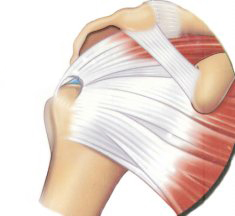
It is caused by a mechanical conflict between the subacromial arch and the rotator cuff tendons.
It is fundamental to understand that any imbalance between the rotator cuff and the deltoid, during abduction-internal rotation movements, will result in the rotator cuff rubbing against the acromiocoracoid arch through the subacromiodeltoid bursa.
The same action, repeated a thousand times, will lead to functional failure of this bursa and wear and tear of the cuff on the osteo-ligamentary structures.
The degenerative pathology of the shoulder always starts with a "tendonitis" type of damage that can go as far as the rupture of the tendon.
Reprogrammation posturale / Postural reprogramming
Une récupération de la mobilité passive et active :
- Etirement de la capsule avec le Gyrotonic ou le Cadillac.
- Renforcement des stabilisateurs locaux avec le Reformer ou Gyrotonic ou le petit matériel.
- Renforcement des stabilisateurs globaux avec le Reformer ou Gyrotonic.
- Mobilisation de l'articulation de l'épaule et des mobilisateurs globaux avec le Reformer ou Gyrotonic ou le Gyrotoner.
A recovery of passive and active mobility:
- Stretching of the capsule with the Gyrotonic or the Cadillac.
- Strengthening of the local stabilizers with the Reformer or Gyrotonic or small equipment.
- Strengthening of the global stabilizers with the Reformer or Gyrotonic.
- Mobilization of the shoulder joint and global mobilizers avec le Reformer ou Gyrotonic or the Gyrotoner.